
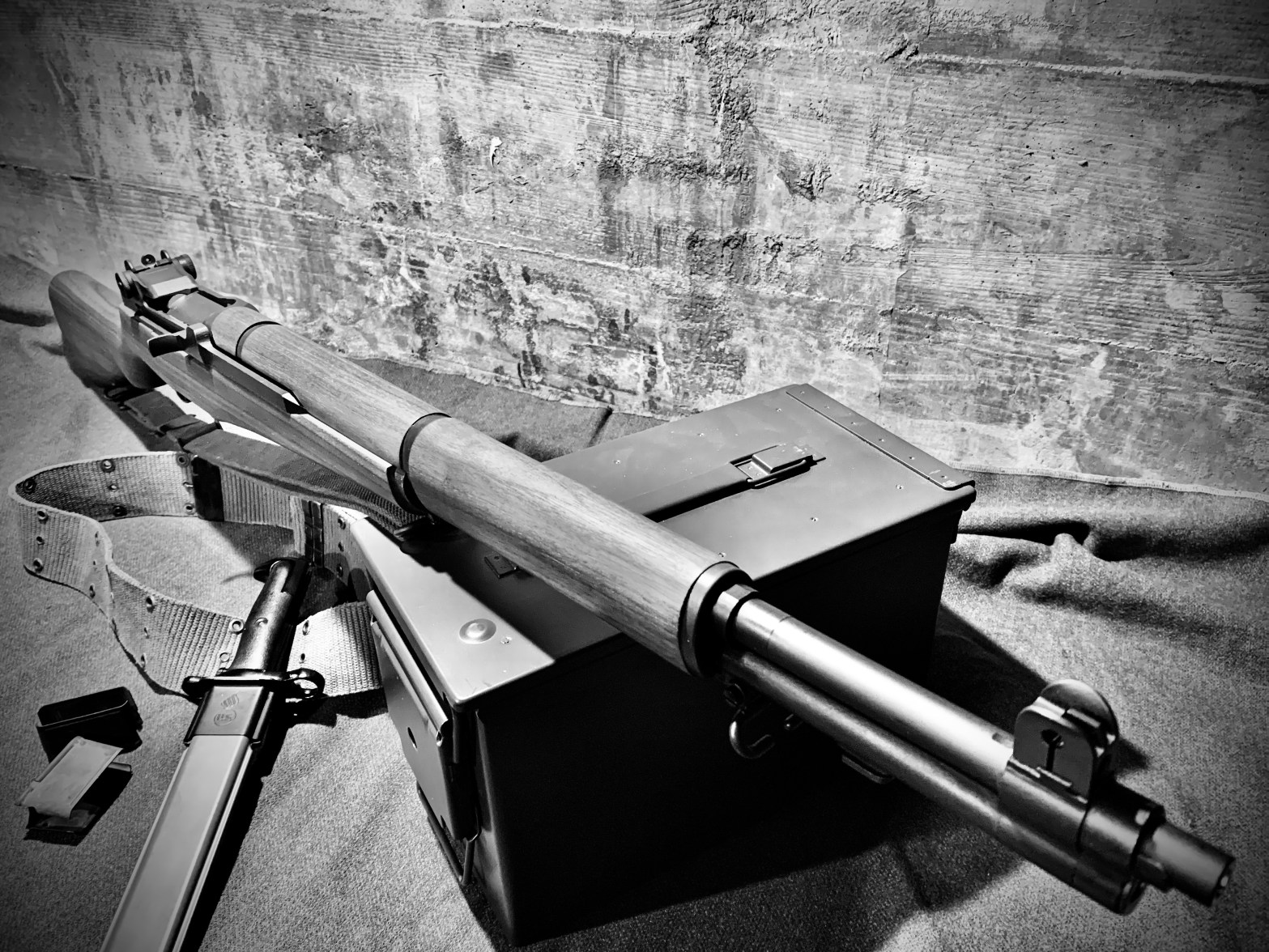
The .30 caliber M-1 service rifle was developed by John Garand at the Springfield Armory in Massachusetts, and was adopted by the U.S. military in 1936. It was the first self loading rifle to see service in the U.S., and was the primary service weapon of U.S. forces in World War II and the Korean War. It continued on for training purposes and to arm our allies well into Vietnam. General George S. Patton famously called the M-1, “the finest battle implement ever devised”, and that reputation is well deserved. The M-1 is the iconic battle rifle. It’s armed men in combat all over the world, in every environment from the arctic cold of the Aleutian Islands to the jungles of Burma, and the deserts of the Middle East. In all those places, the M-1 proved itself as a reliable, accurate, and lethal weapon.
Today, the M-1 is still sought after by collectors, not only for its historical significance, but for its performance on the range. However, as time goes by, original M-1s are becoming increasingly rare. Enter Fulton Armory. They build new M-1s from a combination of new and G.I. parts. Original M-1s were chambered for the .30-06 round, and while Fulton Armory offers rifles in the original chambering, they also offer M-1s chambered for .308 Winchester. It is a rifle chambered for .308 that I’m reviewing here.
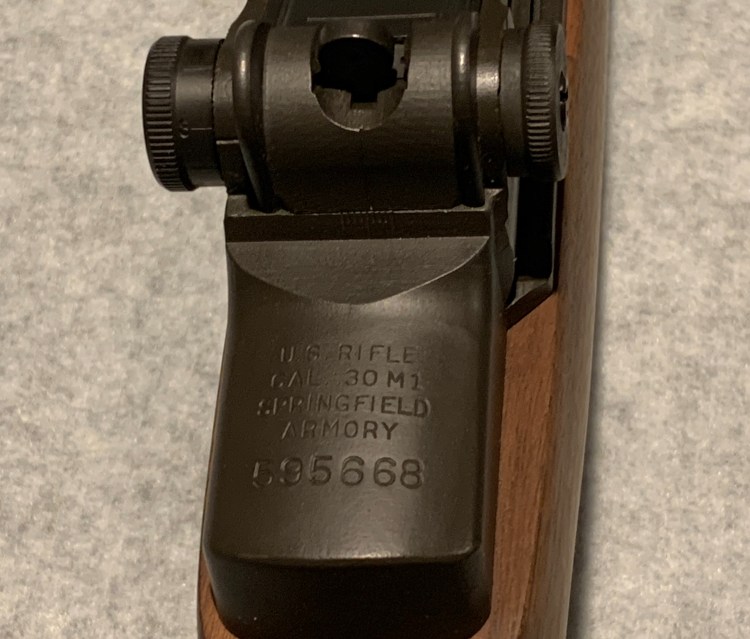
The first thing you notice about Fulton Armory’s M-1 is that it’s a fine looking rifle. The linseed oil finish on the Walnut stock gives the wood a deep, rich color. The parkerizing on the metal is even and uniform throughout. The fit and finish of the rifle, overall, is excellent.
The M-1 is a beefy rifle, designed in a time when stacking swivels were still a thing, and bayonet fighting was still a necessary skill. When marksmanship wasn’t just something taught, but the defining ethos of the rifleman. It was made in a time when rifles weren’t toys, and Fulton Armory’s rifle projects all of this.
So, why an M-1 in .308? It’s really just personal preference. I already have rifles chambered for it. By choosing .308, I don’t have to buy ammo in another caliber just to shoot the M-1. Does it make a difference? Not really. The .308 round is a shortened evolution of the .30-06 anyway. The case dimensions, aside from being shorter, are similar enough that the M-1 retains its original eight round capacity. The .308 and .30-06 are ballistically similar, as well.
Does a different chambering detract from the authenticity of the rifle? I would say no. After the adoption of the 7.62mm NATO round, the Navy actually re-chambered a number of M-1s, and continued to use them for some time. It is one of these rifles that the Fulton Armory M-1 in .308 re-creates.

As I said, the .308 chambering doesn’t change the rifle’s magazine capacity, and eight rounds of ammunition still fit in original G.I. en-bloc clips. The en-bloc is necessary to load ammunition into the M-1’s internal magazine. Thankfully, en-bloc clips are still readily available and inexpensive. So, it doesn’t break the bank to buy a bunch and load them up in advance of going to the range.
Aside from the different chambering, rifles in either caliber remain otherwise the same. Both have 24 inch barrels, and weigh 9 1/2 pounds. The walnut furniture is also identical. The only thing that visually differentiates a rifle chambered for .308 is a steel spacer block at the front of the internal magazine at the mouth of the chamber. The spacer ensures that the short .308 round will feed reliably from the longer magazine well, and makes it impossible to load .30-06 rounds by mistake.
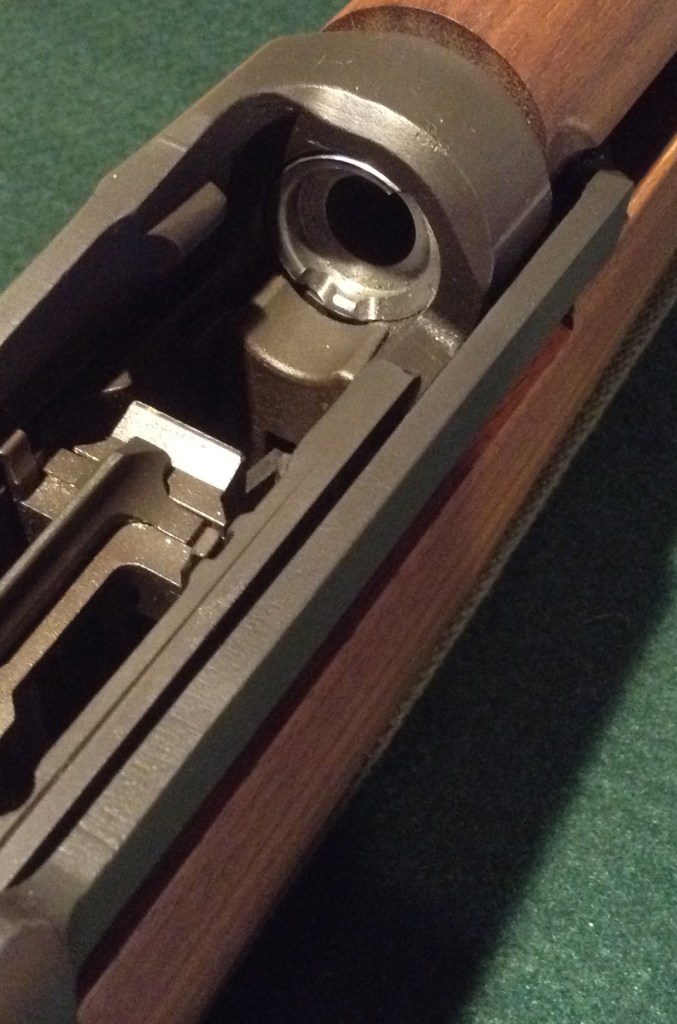
The M-1 breaks down into three groups: the stock, the trigger group, and the receiver group. To disassemble the rifle, pull down and forward on the trigger guard. When the trigger guard is fully disengaged, the whole trigger mechanism and the attached floor plate of the internal magazine will slide out of the bottom of the rifle. With the trigger group out, the stock can be separated from the receiver group.
Looking at the rifle broken down into its groups, I am always struck by the fact that during World War II, American paratroopers jumped into combat with their rifles disassembled like this. The first thing they had to do when they hit the drop zone was take the pieces of their rifle out of its case and assemble it. Often at night, and often under fire. That they could do that successfully under that stress is simply amazing.
In any case, to finish disassembling the receiver, flip it upside down and disconnect the recoil spring and remove it from its channel in the operating rod. Drifting out the retaining pin at the bottom front of the receiver allows you to remove all the parts of the internal magazine. With those out, the operating rod can be brought to the rear, rotated off the ear of the bolt and removed. Last, remove the bolt by bringing it forward out of the receiver.
The M-1 is a gas operated rifle. The long operating rod acts as a piston. During firing, gas is bled off from the ignited propellant through a small hole near the muzzle of the barrel. The gas bleeds into the cylinder directly underneath the barrel. The end of the operating rod sits in that cylinder, and as the gas expands, it pushes the operating rod to the rear, cycling the action. Carbon is a by-product of the burning propellant. So, during cleaning, take care to remove any carbon build-up on the end of the operating rod, or inside the gas cylinder. Also, while the M-1 was designed to be fired dry of lubricant, you should still make sure to apply moderate lubrication anyway to reduce wear on moving parts. Attention should be given to the channels in the receiver that the bolt and operating rod move along, and also the channels that direct the movement of the parts in the internal magazine.
Once cleaning is done, assemble the rifle in reverse order and do a function check. Then you’re ready to head to the range. And range time is what this rifle is all about. The feel of the sling tight on your upper arm, the audible “pop” when you let up on the trigger during follow through and it re-engages with the hammer, and the distinctive “ping!” of the en-bloc ejecting after the last round all make for a great day. What makes a great day even better is that this rifle is very accurate.
In my opinion, the M-1 has the best sights of any World War II era service rifle. Its fixed front sight blade and rear sight aperture that is adjustable for windage and elevation in increments of one inch of movement per click at 100 yards, allows for very rapid sight acquisition and accurate delivery of fire. The M-1 sight set up is so good, it has remained standard on every U.S. service rifle since.
To load the M-1, bring the charging handle back, lock the bolt to the rear with your right hand, and engage the safety. Keep your hand in place, with the blade edge against the charging handle. With your left hand, insert a loaded en-bloc clip into the magazine and push down with your thumb until it locks into place. Here’s where keeping your right hand against the charging handle pays off. When the en-bloc locks in place, it releases the bolt to move forward and chamber the first round. If your right hand isn’t there to hold back the bolt momentarily, it will move forward. If you don’t get your left thumb out of the way in time, it’ll result in a painful case of “Garand thumb”. Remove your right hand from in front of the charging handle, and let the bolt go forward. The first round is now chambered.
A quick note on ammunition is in order. The Fulton Armory M-1 is capable of safely firing both .308 commercial ammunition, and military 7.62x51mm NATO ball rounds. However, higher pressure commercial ammo such as Hornady Superperformance rounds should be avoided. The higher pressure rounds could cause damage to the rifle. Having experienced the catastrophic malfunction of an M-16, I can definitively tell you that you don’t want anything to do with something like that. So, use only standard pressure ammunition to stay safe, and keep your rifle functioning correctly.
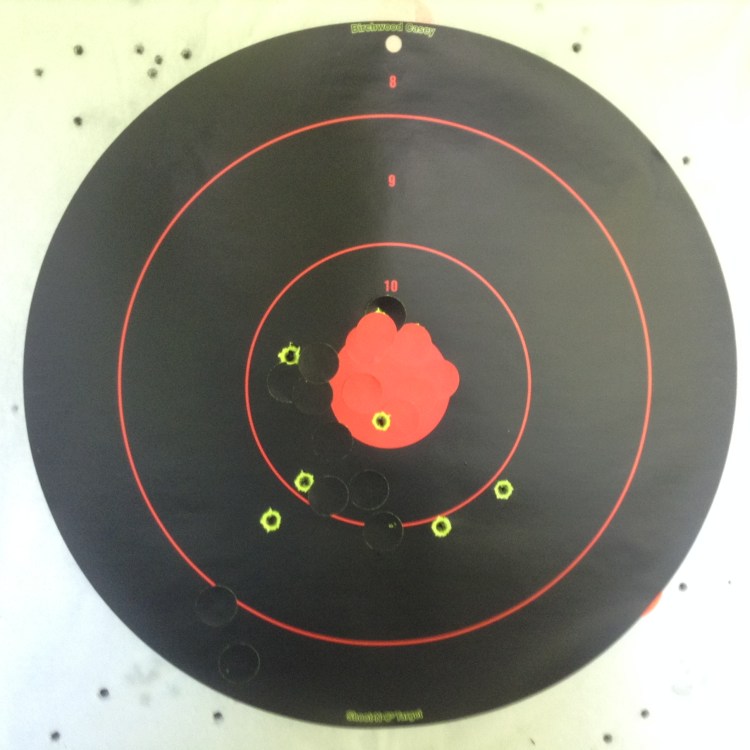
I don’t really like shooting service rifles from a bench rest. They really deserve to be fired with a sling, unsupported. But, since Fulton Armory guarantees that their rifle will shoot under 2 1/2 inches at 100 yards, I needed to shoot from a rest to test their claim. And their claim is, indeed, valid. With Remington standard 150 grain soft point ammunition, I achieved 5 shot groups that printed right at 2 1/2 inches. That’s excellent accuracy from a rifle with iron sights. The weight of the rifle made the recoil manageable, as well. The Fulton Armory M-1 isn’t just a good shooter, it’s a fun rifle.
Fulton Armory’s M-1 is an outstanding rifle. I really like it when manufacturers’ products do what they are advertised to do. Fulton Armory’s M-1 does it in spades. It’s an excellent rifle that gives superior performance. Range time with it is a pure pleasure. MSRP for a .308 M-1 is $2000, which is actually not much more than what good examples of original M-1s are going for these days. The difference is that with Fulton Armory you know what you’re getting: a quality firearm that’s accurate as hell. You don’t have to guess like you would buying a surplus rifle. If you want to own the best infantry rifle of World War II, but one that still shoots like new with excellent accuracy, I highly recommend Fulton Armory’s M-1 Garand chambered for .308 Winchester.
 Tactical & Target